The Philippines: A Coffee Origin You Need to Know
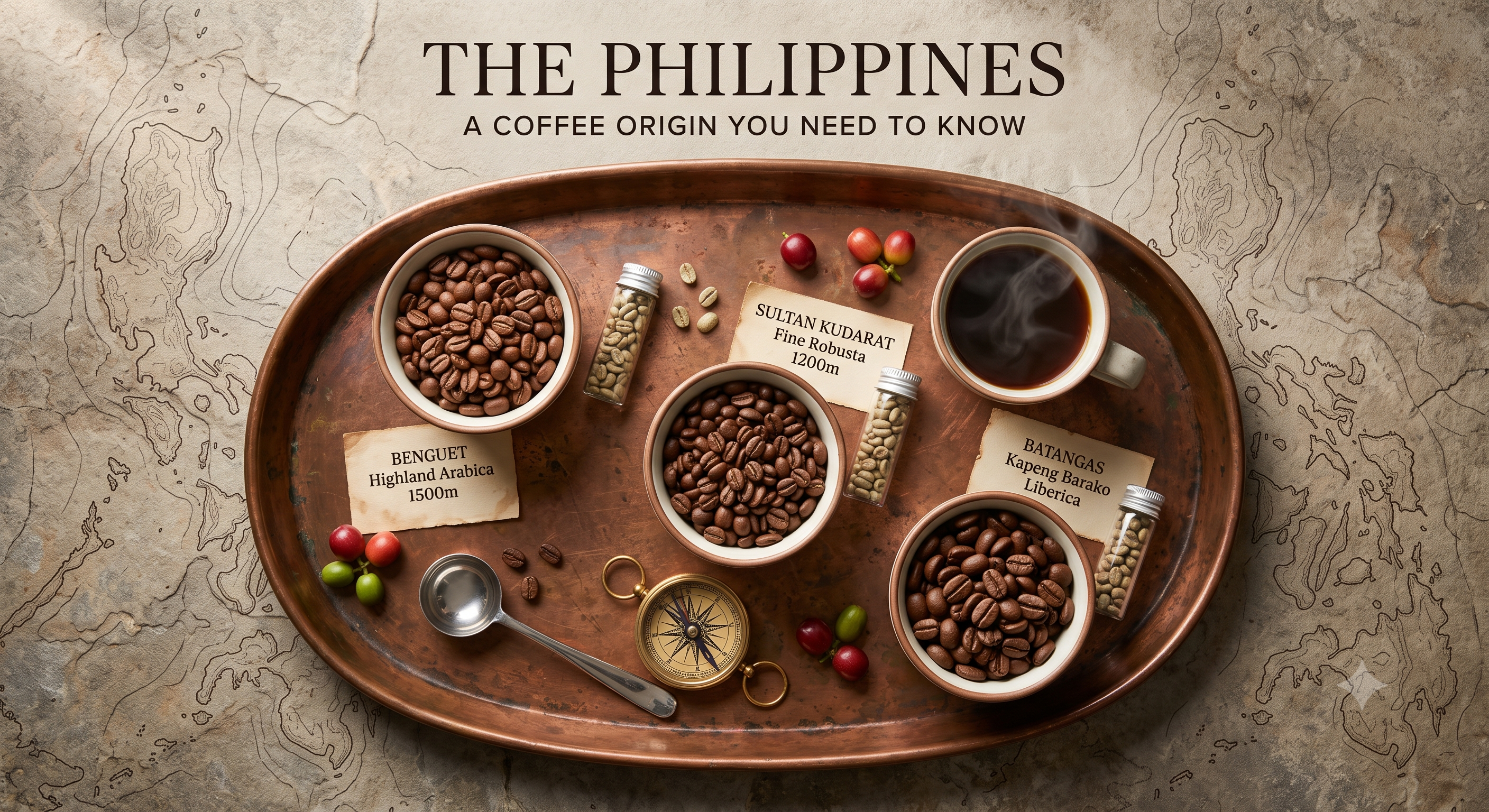
When you think of specialty coffee origins, what comes to mind? Ethiopia. Colombia. Kenya. Guatemala. The Philippines probably isn't on that list — but it should be.
The Philippines is one of the only countries in the world that grows all four commercial coffee species: Arabica, Robusta, Excelsa, and Liberica. This botanical diversity is matched by incredible geographical diversity — volcanic highlands, mist-covered mountains, historic lowland plantations, and everything in between.
This isn't just trivia. It's what makes Philippine coffee extraordinary.
Benguet is famous for its highland Arabicas, grown at 1,400–1,700 meters in the Cordillera mountains. The cool mountain air slows cherry development, producing dense beans with remarkable complexity and clarity.
Bukidnon, the "Food Basket of Mindanao" due to its high altitude, consistent rainfall, and volcanic ash rich soils that have created the most fertile growing conditions in the Philippines. Home to the heirloom "sweet coffee" varietal, an Ethiopian Landrace grown known for its exceptional flavour profile.
Mount Apo rises as the highest peak in the Philippines, its volcanic soil creating the foundation for coffees that are pushing boundaries. Farmers here are experimenting with anaerobic natural processes, honey processing, and lactic fermentations — exploring what these terroirs can do when processed with intention.
Sultan Kudarat is the heartland of Philippine Robusta. But this isn't the commodity Robusta you might expect. Grown with care, processed with attention, it delivers earthy depth and chocolatey body that redefines what this species can be.
Batangas is the historic home of Liberica — specifically Kapeng Barako, the legendary coffee that once made the Philippines the fourth-largest coffee producer in the world. Bold, floral, full-bodied, it's unlike anything you'll find in a typical specialty café.
The Philippines has been growing coffee for centuries. The Spanish brought it in the 1740s. By the 1880s, it was the fourth-largest coffee producer in the world. Then came the coffee blight of 1889, and the industry nearly collapsed.
But the farmers didn't stop. They kept growing. They kept tending. They kept believing.
Today, a new generation of specialty roasters and coffee drinkers re-discovering the extraordinary coffee that the Philippines has to offer.
The origins are diverse. The terroirs are distinct. The flavours are waiting to be discovered.